
e-ISSN
3139-2784
Skip to main content Skip to main navigation menu Skip to site footer
Journal of Transformative Pedagogies and Learner Engagement
  • Home
  • All Issues
    • Current
    • Archives
  • Contributor Guidelines
    • Author Guidelines
    • Reviewer Guidelines
    • Editorial Guidelines
  • Announcements
  • Editorial Board
  • Journal' Policies
    • Ethics, Conflict of Interest & Consent Policy
    • Plagiarism Policy and Academic Integrity
    • Artificial Intelligence (AI) Usage Policy
    • Peer Review Policy
    • Open Access Policy
    • Digital Archiving Policy
  • About
    • About the Journal
    • Aim and Scope
    • Privacy Statement
    • Publisher Contact
Search
  • Register
  • Login
  1. Home /
  2. Retraction Policy

Retraction Policy

Journal of Transformative Pedagogies and Learner Engagement (JTPLE), published by Synergy Publication, is committed to maintaining the integrity, reliability, and transparency of the scholarly record. Retractions are issued when published articles contain serious errors or ethical violations that invalidate the work or undermine confidence in its findings.

This policy follows the COPE Retraction Guidelines and internationally accepted standards of academic publishing.


Grounds for Retraction

An article may be retracted if, after publication, it involves one or more of the following:

  • Plagiarism or substantial unattributed overlap with previously published work
  • Duplicate or redundant publication
  • Fabrication, falsification, or manipulation of data or results
  • Serious methodological or analytical errors that invalidate conclusions
  • Unethical research practices (e.g., lack of required ethical approval or informed consent)
  • Authorship manipulation or undisclosed conflicts of interest
  • Any other form of serious academic or publication misconduct

Corrections (Errata)

Minor errors that do not affect the validity of the research findings may be corrected through an erratum or corrigendum. All corrections are clearly linked to the original article to ensure transparency and accuracy of the scholarly record.


Expressions of Concern

In cases where serious concerns are raised but conclusive evidence is not yet available, the journal may issue an Expression of Concern. This notice will be clearly linked to the original article and will remain in place until a final decision is reached.


Retraction Process

  1. Initiation: A retraction may be initiated by the editors, publisher, reviewers, readers, or external institutions.
  2. Investigation: The editorial office conducts a thorough investigation in accordance with the guidelines and flowcharts provided by the Committee on Publication Ethics (COPE). Authors are informed of the concerns and given an opportunity to respond. Investigations are conducted as promptly as possible, with efforts made to reach a resolution within a reasonable timeframe.
  3. Editorial Decision: Based on evidence and author response, the Editor-in-Chief, in consultation with the editorial board and publisher, decides whether retraction is warranted.
  4. Retraction Notice: If approved, a formal retraction notice is published, clearly linked to the original article, stating the reason for retraction.

Post-Retraction Handling

  • The retracted article remains available online to preserve the scholarly record but is clearly marked as “Retracted” on all versions (HTML/PDF).
  • The retraction notice is freely accessible.
  • Relevant indexing and abstracting services are notified.

Author Responsibility and Institutional Notification

In cases of serious or repeated misconduct:

  • The author’s affiliated institution, funding agency, or relevant authority may be informed.
  • Additional editorial sanctions may be imposed, in line with COPE guidance.

Policy Transparency and Revisions

This Retraction Policy forms part of the SIJMDS Publication Ethics framework and applies to all articles published in the journal. It is periodically reviewed and may be updated to reflect updates in international publishing ethics standards or regulatory requirements.
Make a Submission

Make a Submission

Accessibility

Payment System

Proceed to APC Payment

Quick Access

  • About
  • Aim and Scope
  • Open Access
    • APC
  • Indexing
  • Submission Guidelines
  • PlagiarismPolicy
  • Retraction Policy
  • Author Declaration

Access Map

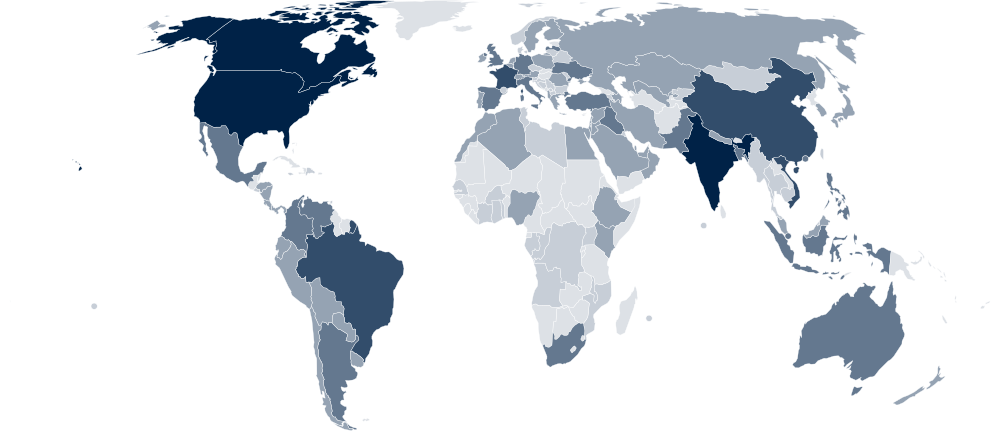
World map shading the countries the accesses to the journal come from
1 908
Unique accesses
3,096
Countries
118

Last 365 days

Anti-scraper filter applied from Feb 9, 2026

  1. India 908
  2. United States 421
  3. Canada 278
  4. Viet Nam 144
  5. China 135
  6. Brazil 95
  7. France 60
  8. United Kingdom 59
  9. Singapore 57
  10. Argentina 41
Most Read Article Last 30 Days
  • Attitude of Families of Persons with Disabilities towards Community-Based Rehabilitation (CBR) Programme
    39
  • Borrowed Authorship: AI-Mediated Academic Writing, Authorial Disconnect, and the Problem of Intellectual Ownership
    37
  • Effect of Brain Plasticity-Based Activities on Attention among Students with Specific Learning Disabilities in Inclusive Schools
    27
  • Networked Learning Environments and Educational Collaboration in the Digital Age
    21
  • Implementation of Early Childhood Care and Education (ECCE) under the National Education Policy 2020 in India: A Policy Perspective
    21

Keywords

Browse

  • Categories

Latest publications

  • Atom logo
  • RSS2 logo
  • RSS1 logo

Information

  • For Readers
  • For Authors
  • For Librarians

Journal of Transformative Pedagogies and Learner Engagement

  • 657/366, Ambedkar Marg,
    Mandawali Fazalpur,
    Laxmi Nagar (East Delhi),
    Delhi - 110092
    India
  • E-mail: editor.jtple@spublication.in
e-ISSN 3139-2784

Editorial & Navigation

  • Editorial Masthead
  • Author Guidelines & Submissions
  • Current Issue
  • All Archives
  • Contact Editorial Office
  • Privacy & Data Policy

Open Access & Licensing

Open Access

All articles are published under the Creative Commons Attribution 4.0 International License (CC BY 4.0). Authors retain copyright, and Synergy Publication has a non-exclusive right to publish and distribute the articles.

Disclaimer

The statements, opinions, and data contained in all publications are solely those of the individual author(s) and contributor(s) and do not necessarily reflect the views of Synergy Publication or the editor(s) of the journal. While reasonable editorial and peer-review procedures are followed, Synergy Publication and the editor(s) do not endorse any products, methods, or claims described in the content.

© 2024 - 2026 Synergy Publication. All rights reserved (This refers only to the website design and hosting).
Powered by Open Journal Systems Top